
A few weeks ago, one of my staff members stopped by my office.
“Thanks for finally moving the vending machines.”
I laughed.
Of all the things I thought we’d talk about that morning, the vending machines weren’t on my list. Not because they weren’t important—they absolutely were. Because it had taken me…almost two years. Now, before you decide I was ignoring everyone’s requests, hear me out. It wasn’t that I didn’t care. Quite the opposite. Every time I thought about moving them, something else felt more urgent.
- A student crisis.
- A staffing issue.
- Budget planning.
- Parent phone calls.
- Another meeting.
- The start of another school year.
- You know…principal stuff.
The vending machines just kept sliding a little farther down the list. When they were finally moved, I realized something.
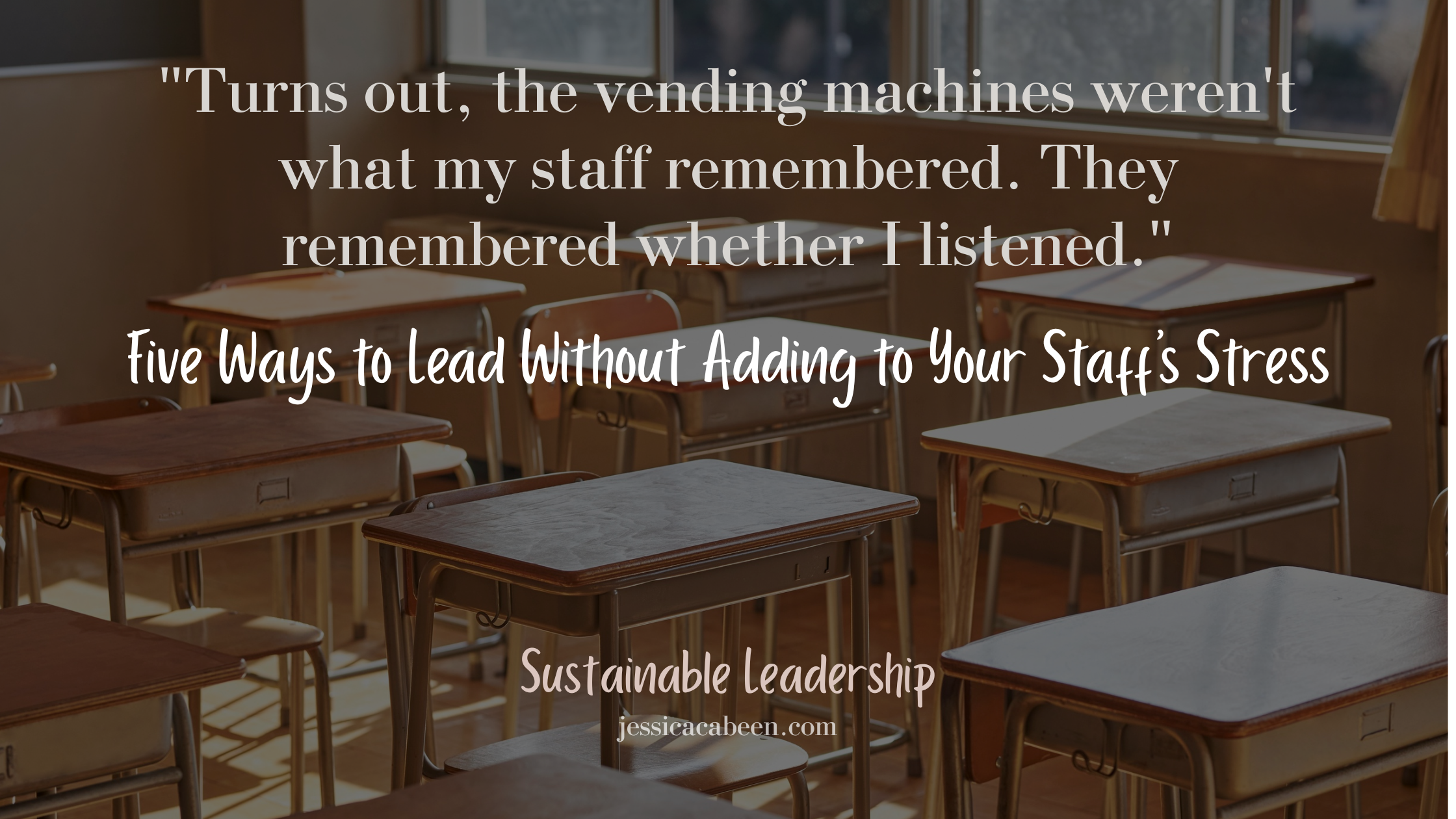
Turns out, the vending machines weren’t what my staff remembered. They remembered whether I listened.
That conversation has stayed with me because every August, I feel the same temptation.
I want every schedule finalized.
- Every question answered.
- Every document polished.
- Every initiative introduced.
- Every detail ready before students walk through the doors.
Our hearts are in the right place. We want our staff to feel prepared. But over the years, I’ve learned something. Sometimes, in our effort to prepare people for everything, we unintentionally make them feel responsible for everything.
And when everything feels important…
Nothing feels clear.
As I begin my 26th year in education, I’m realizing one of the greatest gifts I can give my staff isn’t more information.
It’s more clarity.
Make priorities obvious.
Not everything deserves equal attention. If I spend ten minutes talking about copier procedures and ten minutes talking about building relationships with students, I’ve unintentionally communicated they carry the same weight.
They don’t.
Our staff is looking to us to answer one simple question:
What matters most right now?
When we answer that well, we lower anxiety before we ever solve a problem.
Repeat what matters.
There was a time when I thought repeating myself meant I wasn’t communicating very well. Now I think the opposite. Teachers are carrying lesson plans, student needs, family communication, new initiatives, and about a hundred other things in their heads. Repeating what matters isn’t annoying.
It’s reassuring.
Remove unnecessary decisions.
One of the easiest ways to add stress is by making people figure everything out on their own.
- Can directions be clearer?
- Can resources live in one place?
- Can a process have one less step?
Every unnecessary decision we remove gives teachers more energy for the decisions that matter most—the ones they make with students every single day.
Protect margin.
I used to believe good leaders launched everything before school started.
Now I keep a list called “Not Yet.”
Not because those ideas aren’t good. Because timing matters. Some things become more successful simply because we waited until people had room to receive them.
Leadership isn’t just deciding what to do. It’s deciding what can wait.
Celebrate progress before perfection.
The first weeks of school are messy. They’re supposed to be. Students are learning routines. Teachers are learning students. Leaders are adjusting plans. Nobody needs to have it all figured out by Labor Day.
The goal isn’t perfection.
The goal is progress.
The goal is momentum.
As I think back to those vending machines, I smile. Not because they finally moved. Because they reminded me of something I hope I never forget. People rarely need us to have every answer. They need us to create enough clarity that they know where to begin. Maybe that’s one of the most important jobs of leadership.
Not making everything happen faster.
Helping the people around us breathe a little easier.
- One conversation.
- One decision.
- One clear priority at a time.
Let’s Keep the Conversation Going
If this reflection resonated with you, I’d love to stay connected.
A few times a month, I share stories from the field, practical leadership insights, and simple strategies to help leaders create healthier schools—one small step at a time.
If you’d like more leadership reflections like this, be sure to subscribe to my newsletter, follow along on social media, and share this post with another leader who could use a reminder that clarity is one of the greatest gifts we can give our teams. I’d also love to hear from you.
What’s one thing you’ll do this year to create more clarity for your staff?
Leave a comment below or join the conversation using #TheDripEffect.
Until next time…
Small Actions. Steady Pace. Lasting Impact.
Jessica Cabeen
School Leader | Author | Speaker | Leadership Coach
Co-author of The Drip Effect
jessicacabeen.com
0 Comments